


I didn’t relapse in a blaze of chaos.
There were no ambulances. No tearful confessions. No obvious rock bottom.
I relapsed quietly.
I was 90 days sober, the “doing well” kind of sober. I could rattle off my clean date, list my progress, name my favorite recovery slogan. People in my life were proud. Some even called me an inspiration.
But underneath?
I was tired. I was brittle. And I was slowly falling apart in a way no one could see.
I told myself I couldn’t go back. Couldn’t admit it. Couldn’t start over.
What changed that wasn’t willpower—it was a Partial Hospitalization Program that met me exactly where I was: ashamed, disconnected, and afraid to say the truth out loud.
I Hid My Relapse Like My Life Depended On It
I wasn’t “back out there” in an obvious way.
There were no big messes—just little compromises.
- I stopped calling my sponsor.
- I skipped a few meetings, then all of them.
- I started isolating more, smiling less.
- I told myself I was just tired, just stressed, just needing space.
But then one drink became two. One pill turned into three.
I wasn’t out of control—I was in hiding.
The longer I kept it quiet, the harder it became to speak.
I kept thinking, If no one knows, maybe I can fix it quietly.
Spoiler: I couldn’t.
I Thought I’d Failed for Needing Help Again
There’s this awful pressure in recovery—especially after a milestone like 90 days.
You feel like you’re supposed to be past “this.” Past struggling. Past slipping.
So when I relapsed, I didn’t just feel like I made a mistake. I felt like I lost my right to ask for help again.
I imagined people saying, “What happened to you?”
I imagined pity. Disappointment. Distance.
Instead, what I found was a Partial Hospitalization Program that didn’t ask for my resume—just my honesty. And slowly, I started to find my way back.
What a Partial Hospitalization Program Actually Gave Me
I had no idea what PHP really meant before I called.
To be honest, it sounded too intense for me.
I wasn’t “that bad,” right?
But I was bad enough to know something had to change.
What PHP offered was structure—not confinement.
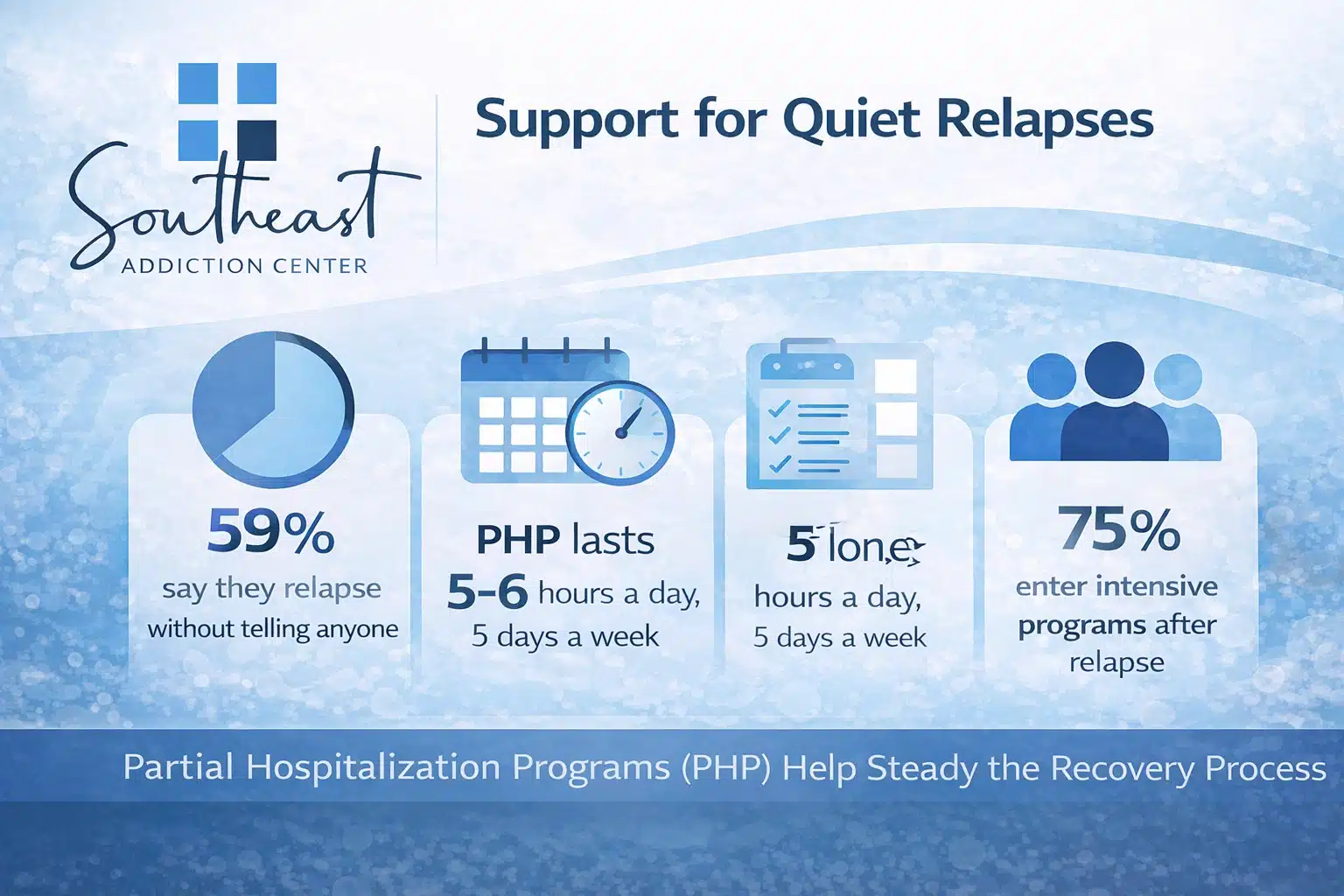
It was 5–6 hours a day of support, therapy, skill-building, and accountability. I went home at night, but during the day, I was immersed in something real.
Not just talking about recovery. Practicing it.
Over and over. Even when I didn’t feel like I deserved it.
It Wasn’t a Miracle—It Was a Process
I didn’t walk into PHP and suddenly feel whole again.
I walked in numb. Defensive. Convinced I was wasting everyone’s time.
But the staff didn’t flinch. They didn’t shame me. They didn’t say, “How could you relapse?”
They said, “You’re here. That’s what matters.”
And that simple statement was the start of everything.
Because I was there. Sitting in the chair. Showing up again.
Some days that was the biggest win.
I Had to Grieve My Own Expectations
I thought I was further along.
I thought 90 days meant I was “safe.”
Coming back to treatment felt like breaking a promise to myself.
But one of the counselors in PHP said something that changed me:
“Relapse doesn’t erase your recovery. It just shows you where the holes are.”
That hit me hard. Because that’s what it was.
My recovery wasn’t fake. It just wasn’t strong enough yet.
I needed to stop hiding from that and start working with it.
What Helped Me Most Inside the Program
It wasn’t one big breakthrough. It was the layering.
- Group therapy where I didn’t have to lie.
- Individual sessions where I could say, “I used again,” without apology.
- Learning how to handle shame instead of letting it control me.
- Regulating my nervous system instead of white-knuckling through life.
PHP slowed me down enough to feel again—and gave me tools to stay with those feelings instead of running.
It didn’t fix everything. But it gave me back my footing.
Why I’m Telling You This Now
Because maybe you’re where I was.
Maybe you relapsed and didn’t tell anyone.
Maybe you’re trying to hold it together just long enough to “fix it” in secret.
Maybe you’re scrolling this blog at 2 a.m. wondering if you’re still worth saving.
Let me be clear: You are.
You don’t have to start all the way over. You just have to start again.
And a Partial Hospitalization Program in Peachtree Corners could be your next right step.
Not because you failed.
Because you’re still trying. And that counts.
What Real Healing Looked Like for Me
- Telling the truth without rushing to spin it.
- Showing up even when I didn’t want to.
- Letting people see me raw—and learning they didn’t leave.
- Learning that relapse doesn’t mean I’m broken. Just human.
PHP didn’t save me. But it met me—when I couldn’t save myself.
And it reminded me: recovery isn’t about perfection. It’s about return.
FAQ: For the Alum Who Slipped
Do I have to start over completely if I relapse?
No. Recovery isn’t all-or-nothing. The work you’ve done still matters. PHP helps you build on what’s left—not pretend it never happened.
Is PHP only for people in full-blown crisis?
Not at all. It’s designed for people who need more than weekly therapy, but don’t need full inpatient care. If you’re struggling to stay clean or emotionally regulated, PHP may be a fit.
Will people judge me for coming back?
No. At Southeast Addiction, we know relapse is common—and painful. The team is trained to meet alumni with compassion, not criticism.
How long is a PHP program?
It varies, but many programs last 3–6 weeks. It’s intensive—but temporary. The goal is stabilization, skill-building, and a supported return to your life.
Can I work or go to school while in PHP?
Sometimes. PHP is a daytime commitment, so some adjustments may be needed. But many people find ways to coordinate schedules with help from their care team.
What happens after PHP?
You’ll typically step down into an Intensive Outpatient Program (IOP) or regular therapy. PHP is a foundation—not the finish line.
You’re Not Starting Over. You’re Starting Again.
If you’ve slipped but haven’t said it out loud yet, this is your sign.
You don’t have to keep hiding. You don’t have to keep pretending.
You just have to take the next right step.
And Southeast Addiction’s Partial Hospitalization Program in Peachtree Corners is here to help you do that—with honesty, care, and zero shame.
Call 888-981-8263 to learn more.
You are not your relapse.
You are not alone.
You are not done.