

Table of Contents
- You Don’t Have to Be on Death’s Door to Need Medical Detox
- It’s Not Like in the Movies (Thank God)
- Detox Is Hard—but Not the Way You Think
- Medical Detox Is Customized to Your Substance, History, and Needs
- Detox Is the Start Line—Not the Finish
- You Can Be Scared and Still Show Up
- What Happens After Detox?
- FAQs About Medical Detox (That You Might Be Too Nervous to Ask)
- You Don’t Need to Keep Suffering Just to “Prove” You’re Ready
If you’re reading this, you’re probably already carrying something heavy—fear, maybe. Exhaustion. The quiet dread that things have gotten too far out of your control. You’ve been holding it together just enough, for just long enough, and now you’re asking: Could detox actually help me?
But then the second voice kicks in: What if detox is worse than the addiction?
Let’s clear this up right now: medical detox is not the horror show you’ve imagined. It’s not punishment. It’s not a bootcamp. It’s not a room where you shake and sweat alone until someone decides you’re “done.”
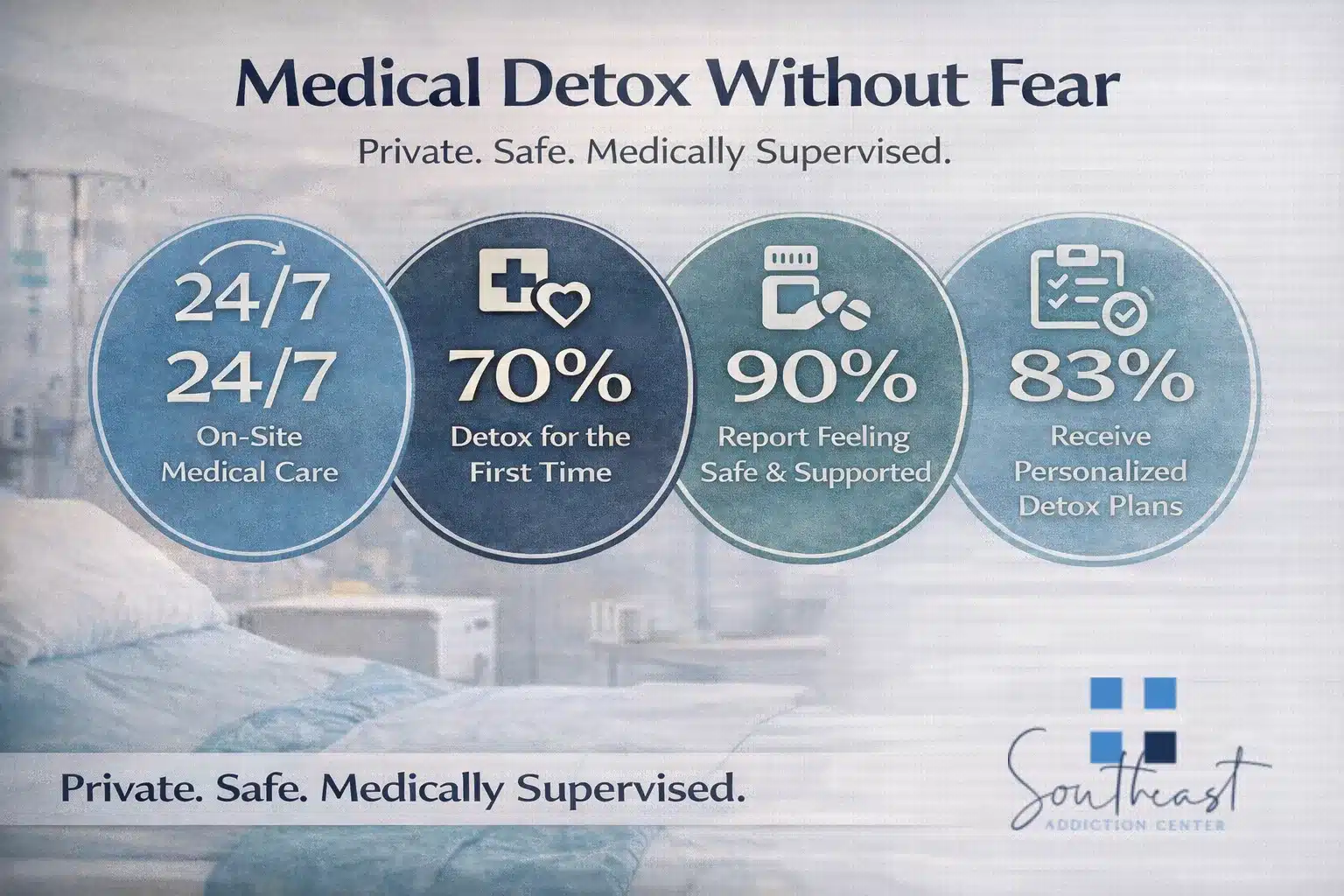
At Southeast Addiction, our medical detox is designed for first-timers like you—people who are scared but ready. People who know something needs to change, but aren’t sure if they can survive the change itself.
This blog is your no-fluff explainer. No scare tactics. No sugar-coating. Just the truth about what detox is, how it works, and why it’s one of the most caring, courageous things you can do for yourself.
You Don’t Have to Be on Death’s Door to Need Medical Detox
We’ve been trained to believe that detox is only for people who are barely conscious, bleeding rock bottom from every direction. That’s false.
Here’s the real bar: If your body or mind freaks out when you try to stop drinking or using—detox is for you.
You don’t need to be hospitalized from a seizure to qualify. You don’t need to have lost your job, your marriage, or your sanity. If you’ve tried to quit and felt sick, scared, or unstable—physically or emotionally—your system needs help, not punishment.
Detox is for the people who are ready to stop before they lose more.
It’s Not Like in the Movies (Thank God)
The detox scenes we see in pop culture? Screaming. Restraints. Cold sweats in a locked psych ward. Monitors beeping while someone thrashes alone.
That’s not how we do it.
Medical detox today is quiet, supportive, and medically supervised. You’ll have your own space. You’ll be monitored 24/7 by staff who understand what withdrawal feels like—and how to reduce its severity with medication, hydration, nutrition, and actual human care.
You’re not just observed. You’re cared for. Big difference.
No one’s yelling at you. No one’s shaming you. No one’s treating you like a lost cause.
You’re not here to be punished. You’re here to get steady—so you can finally start healing.
Detox Is Hard—but Not the Way You Think
Yes, detox can be uncomfortable. Your body is learning how to function without a substance it’s depended on. That creates stress—both physical and emotional.
But here’s the thing most people don’t talk about: detox is less about pain, and more about fear.
Fear of what’s next. Fear of being alone. Fear that you’ll never feel okay without drugs or alcohol. That fear can feel worse than the physical symptoms.
So at Southeast Addiction, we treat both.
We don’t just monitor vitals. We check in on your thoughts. We help you sleep. We help you eat. We help you not spiral.
And when you feel like giving up, someone is there to remind you: you’re doing something incredibly brave.
Medical Detox Is Customized to Your Substance, History, and Needs
No two detoxes are the same—and they shouldn’t be.
Whether you’re withdrawing from alcohol, benzos, opioids, or a mix, your body has specific needs. You might need medications to prevent seizures. You might need blood pressure monitoring. You might need nothing more than sleep and a lot of water.
That’s why we start with a full clinical and emotional assessment. We learn what you’ve been using, how much, for how long, and what else is going on—mentally, physically, emotionally.
Then we build a plan with you. Not to control you—but to support you in the safest way possible.
Detox isn’t a template. It’s a tailored experience.
Detox Is the Start Line—Not the Finish
Let’s be clear: detox doesn’t “fix” addiction. It doesn’t erase trauma, teach coping skills, or rebuild your relationships.
It clears the fog.
It helps your brain and body stabilize so you can make real choices again—without the chemical chaos running the show.
Detox is like coming up for air. It’s a pause button. A reset. And it gives you the clarity to decide what comes next—whether that’s residential treatment, outpatient care, or something more localized like support in Georgia.
Think of detox like a doorway. What happens after you step through it? That’s where recovery really begins.
You Can Be Scared and Still Show Up
Let’s not pretend this is easy. Choosing detox takes guts. It means stepping into the unknown and saying, I want something different—even if I don’t know what that is yet.
You’re allowed to be scared. You’re allowed to cry, hesitate, even resent the process.
But you’re also allowed to ask for relief. For peace. For the chance to wake up tomorrow without your body screaming for something it’s not supposed to need.
Medical detox isn’t about “fixing” you. It’s about proving you’re not too far gone to deserve a beginning that doesn’t hurt.
You’re not weak for needing help. You’re strong for asking.
What Happens After Detox?
After detox, your options expand.
You’ll meet with our team to talk about what comes next. Maybe that’s a 30-day residential program. Maybe it’s intensive outpatient. Maybe it’s something customized based on work, family, or finances.
We don’t drop you at the door and say “good luck.” We walk with you until your footing is strong.
And if you’re worried about next steps? Don’t be. Detox gives you enough clarity to make those decisions. You don’t need to map out your entire recovery today.
You just need to take the first step.
FAQs About Medical Detox (That You Might Be Too Nervous to Ask)
Do I really need detox if I’m not “that bad”?
If stopping on your own feels dangerous, if withdrawal symptoms scare you, or if you’ve tried to quit before and couldn’t—yes, detox is likely the safest place to start.
Is medical detox painful?
Not always. Our goal is to make you as comfortable as possible. We use medication to manage withdrawal symptoms, and we offer around-the-clock support to help with anxiety, sleep, and physical discomfort.
Can I have visitors or phone access?
In early detox, phone access is usually limited—but this is to help you stabilize without outside stress. Once you’re more regulated, we’ll guide you through next steps and reconnecting safely.
Will I be medicated the whole time?
Only if it’s needed. Some clients benefit from medication-assisted detox (especially with alcohol or benzo withdrawal), but everything is prescribed and monitored based on your specific case.
What happens after detox?
You’ll meet with our treatment team to build a plan. Whether that means entering one of our programs or exploring other treatment options in Georgia, you won’t be left hanging.
What if I’ve relapsed before—does that make detox harder?
Not necessarily. Relapse doesn’t make detox more painful, but it does increase the risk of withdrawal complications. That’s why medical supervision matters, especially after multiple attempts.
You Don’t Need to Keep Suffering Just to “Prove” You’re Ready
If you’ve been waiting for some catastrophic moment to “earn” detox… let this be your permission to stop.
You don’t have to lose everything. You don’t have to be seconds from overdose. You don’t have to destroy your life just to deserve help.
You already do. Right now. As you are.
Let this be your turning point.
Call 888-981-8263 or visit Southeast Addiction’s medical detox program to learn more about our medical detox services in Georgia. You don’t have to go through withdrawal alone. And you don’t have to keep pretending you’re fine. We see you—and we’re ready when you are.