


If you’re here, chances are something inside you already knows: this time is different.
Your son or daughter has used before. Maybe they’ve even been to treatment before. Maybe they told you they were clean. Maybe they were—for a while. But now? You see the signs again. The evasiveness. The slipping grades. The sleep schedule that doesn’t make sense. The money that vanishes.
And someone—maybe a therapist, a friend, or a program director—mentioned medical detox.
It might have hit like a punch. Maybe your first thought was, Is it really that serious?
The short answer: it could be. And it doesn’t mean you missed something. It means their body may now be dependent on a substance in a way that puts their safety at risk when they stop. But here’s the good news:
Medical detox isn’t a last resort. It’s a first act of care.
This blog is for you—the parent who’s scared, confused, trying not to panic, and wondering what “medical detox” actually means for your child, your family, and the road ahead.
What is medical detox?
Medical detox is a professionally supervised process that helps someone safely stop using drugs or alcohol while managing withdrawal symptoms.
When someone is physically dependent on a substance, quitting abruptly can lead to a wide range of symptoms—some mildly uncomfortable, others dangerous. These can include:
- Nausea and vomiting
- Shaking and sweating
- Severe anxiety or paranoia
- Hallucinations
- Seizures
- Elevated heart rate or blood pressure
- Suicidal thoughts or emotional breakdown
Medical detox provides round-the-clock care to manage these symptoms and prevent complications. This often includes the use of medication, supportive therapies, and emotional monitoring.
At Southeast Addiction, our medical detox program is designed to stabilize—not shame. We focus on creating a safe, calm space where your child can begin recovery with dignity and support.
Why is detox necessary now, if it wasn’t before?
That’s one of the most common—and most valid—questions we hear from parents.
The truth is: detox becomes necessary when someone’s physical dependence has escalated.
Maybe the last time they used, they could stop for a few days without serious symptoms. That may no longer be true. Repeated cycles of use and withdrawal can make the body more sensitive—and more reactive.
Other reasons detox might be necessary now:
- They’re using more often, or in higher amounts
- They’re mixing substances (e.g., alcohol + benzos or opioids)
- Their withdrawal symptoms have become severe or dangerous
- There are medical or psychiatric risks involved in stopping abruptly
This isn’t your fault. You didn’t overlook something. Substance dependence is progressive—and detox is a medical response to a medical condition.
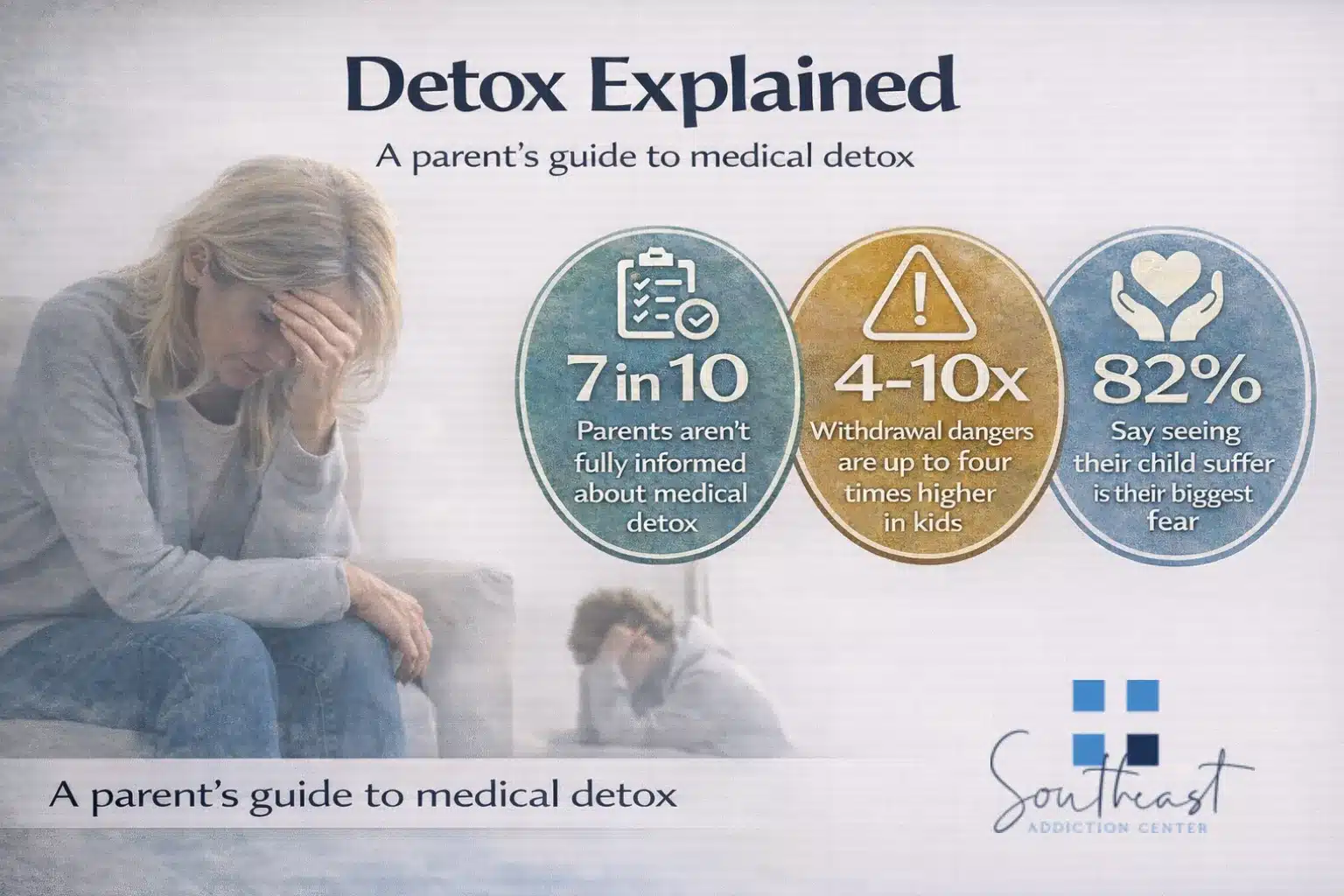
How do I know if my child really needs medical detox?
You may not have access to all the details of their use—and that’s okay. But here are a few red flags that point toward the need for medically supervised detox:
- They’ve tried to stop and couldn’t due to physical or emotional symptoms
- They experience withdrawal between doses or in the mornings
- They use to “feel normal” rather than to get high
- You’ve noticed tremors, mood swings, or disorientation
- They’ve had past seizures or overdoses
- They seem terrified of being without the substance—even for a short time
If any of these apply, it’s worth having a clinical team assess them. At Southeast Addiction, we offer confidential evaluations to help determine whether medical detox in Georgia is the appropriate next step.
What happens during medical detox?
Every detox is a little different, depending on what substances have been used, for how long, and the person’s overall health.
That said, here’s what typically happens:
- Clinical Intake
Your child will be assessed by our medical and behavioral health team. We’ll review their substance use history, physical health, mental health, and current symptoms. - Stabilization
This phase may include medications to ease withdrawal symptoms (like nausea, anxiety, tremors, or insomnia) and prevent complications like seizures or delirium. Nursing and clinical staff monitor vitals and symptoms regularly—often hourly during the first day or two. - Emotional Support
Detox can be emotionally intense. That’s why we provide 1:1 check-ins, brief therapy sessions (as appropriate), and space to begin building trust. Many young adults begin to “come back online” here—mentally and emotionally. - Treatment Planning
As detox nears completion, we begin talking about next steps—whether that’s inpatient care, outpatient therapy, or other resources based on their needs and your family’s input.
How long does detox take?
Most detox stays last between 3 to 7 days. This can vary depending on:
- The substance(s) used
- How long and how heavily they’ve been used
- Physical health conditions
- Co-occurring mental health issues
- How someone responds to withdrawal
Some cases—especially alcohol or benzodiazepine withdrawal—may require longer monitoring. Others stabilize quickly.
Detox isn’t rushed. The goal isn’t just to “get it over with.” It’s to help your child re-enter awareness safely and steadily.
Will they be in pain?
Some discomfort is common. But we do everything possible to prevent unnecessary suffering.
Detox doesn’t have to be a horror story. At Southeast Addiction, we use:
- Medication-assisted withdrawal protocols
- Comfortable, non-hospital-like environments
- 24/7 nursing supervision
- Nutrition and hydration support
- Emotional reassurance and trauma-informed care
Our job isn’t to scare them straight. It’s to help them feel safe enough to stay.
What’s my role while they’re in detox?
This may be one of the hardest parts. Because truthfully?
Your role is to hold steady, not to fix.
In early detox, clients may be disoriented, angry, or detached. They might lash out or say things they don’t mean. Or they might go quiet and distant.
Let the team guide communication. In some cases, early contact is limited to reduce triggers and emotional escalation. We’ll keep you informed and offer guidance on how and when to re-engage.
What your child needs most is:
- To know they’re not being abandoned
- To feel your calm (even if it’s borrowed)
- To see that someone still believes in their worth, even now
What happens after detox?
Detox is the starting line, not the finish.
After stabilization, we work with your child—and your family, if appropriate—to determine next steps. Options may include:
- Residential treatment (30+ days of structured support)
- Partial hospitalization or intensive outpatient programs (IOP)
- Medication-assisted treatment (MAT)
- Therapy and aftercare planning
You won’t be left in the dark. We walk families through options with honesty, flexibility, and realism. Because staying clean after detox? That’s where the work begins—and your child deserves a plan that honors their humanity.
What if they don’t want to go?
Resistance is normal. Especially for young adults.
They might say:
- “I can do it on my own.”
- “It’s not that bad.”
- “Detox is for people who are worse than me.”
Underneath that? Fear. Shame. Maybe the memory of how hard it was last time. Maybe disbelief that anything could actually help.
That’s where compassionate firmness matters.
It’s okay to say: “You don’t have to want this right now. You just have to show up.”
We can help you set those boundaries—and hold them.
Is detox always effective?
Here’s the hard truth: Detox doesn’t guarantee lifelong sobriety. It guarantees a safer beginning.
The effectiveness of detox depends on:
- Follow-up treatment
- Emotional and social support
- Willingness (even small) to engage with change
- A team that sees them as a whole person, not a checklist
At Southeast Addiction, we don’t treat detox as a standalone fix. We treat it as part of a larger process—one that can restore health, clarity, and hope.
Want to know what real support looks like—for you and your child?
Call 888-981-8263 to learn more about our medical detox services in Georgia. You don’t have to figure this out alone. We’ll walk beside you—one decision at a time.