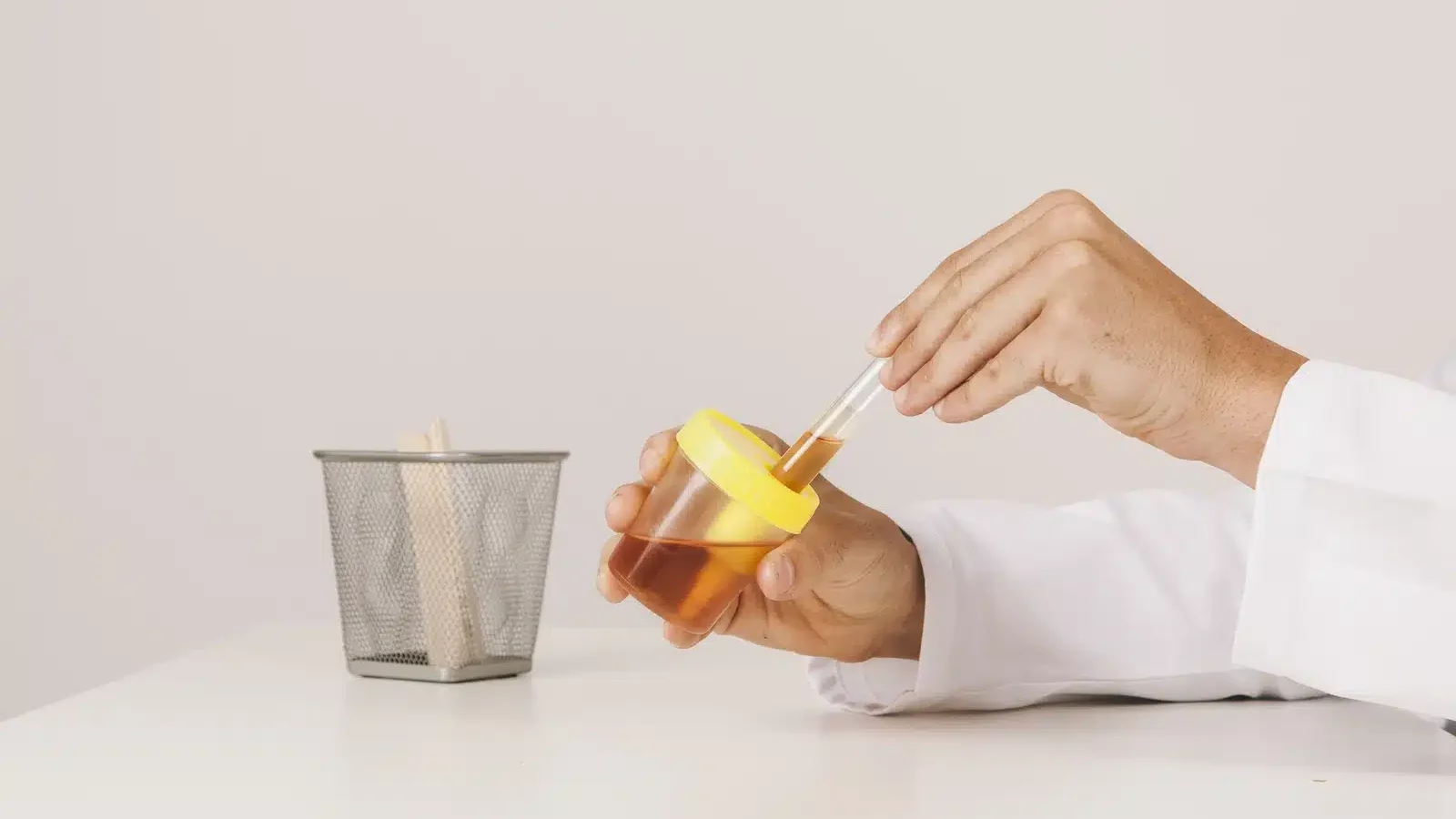
Can a Urine Drug Test Show How Much You Take?

A urine drug test is the most cost-effective and easily accessible method for detecting addictive drug use.[1] While the results can indicate the type of drug used or its byproducts (metabolites), they cannot accurately measure the amount of drug a person has taken. This limitation arises because the body begins processing the drug shortly after it is consumed.

What Drugs Can a Urine Test Detect?

A urine drug test can detect an array of legal and illegal drugs, as well as the last time they were used. Drugs that are commonly picked up on a urine drug test are:[1]

Some urine drug tests can detect multiple substances simultaneously, while others identify only specific substances and their metabolites.

How Much of a Drug Can a Urine Drug Test Detect?

A drug test, also known as a toxicology screen, can measure the concentration of a drug in a person’s system; however, it does not necessarily indicate the amount the individual has ingested prior to the test.[2] This limitation arises because each type of drug has a specific elimination half-life, which refers to the time required for half of the substance to be expelled from the body through natural processes.[3]

To completely eliminate a drug from the system, it typically takes four to five elimination half-lives. Even after a drug is fully eliminated, its metabolites may still be present and detectable in urine drug tests.[4]

Elimination Half-Life Schedules

Elimination Half-Life Schedules

The following list are standard elimination half-lives of the most commonly tested drug classes:

  • Stimulants: 9 to 13 hours[5]
  • Benzodiazepines: 1 to 12 hours for short-acting benzodiazepines, 12 to 40 hours for intermediate benzodiazepines, and 40 to 250 hours for long-acting benzodiazepines[6]
  • Opioids: 0.6 hours for ultra-short opioids and 24 to 36 hours for ultra-long-acting opioids[7]
  • Cannabinoids: 1 to 3 days in casual users and 5 to 13 days in chronic users[8]
  • Alcohol: 4 to 5 hours[9] (Cleveland Clinic states this number may vary depending on how much and how often a person drinks)[9]

How Long is a Drug Detectable in Your Urine?

Drugs are detectable in the urine for approximately 1.5 to four days, though they may stay detectable for up to a week in chronic drug users.[10]

Drug Detection by Category

The following are detection times divided by a category:[11]

  • Alcohol: This central nervous system depressant remains detectable in the urine for 10 to 12 hours.[12]
  • Prescription amphetamines: These stimulants are often used to treat attention deficit hyperactivity disorder and are detectable in the urine for 2 to 4 days.[13]
  • Methamphetamines: Prescription and illegal methamphetamines stay detectable in the urine for 2 to 5 days.[14]
  • Barbiturates: Like those that treat depression and seizures, they remain detectable in urine for up to 1 week.[15]
  • Benzodiazepines: Prescription benzodiazepines are generally used to treat mood disorders like generalized anxiety disorder.[16] They are detectable in the urine for up to 7 days.
  • Cannabinoids: These substances contain the active ingredient THC, which is detectable in the urine for 1 to 30 days.[17]
  • Cocaine: This illegal stimulant stays detectable in the urine for 1 to 3 days.[18]
  • Codeine: This well-known painkiller is detectable in urine for 2 to 4 days.[19]
  • Morphine: This intravenous painkiller is often provided in a hospital setting and is detectable for 2 to 5 days in the urine.[20]
  • Heroin: This illegal opioid is detectable in urine for 2 to 3 days.[21]
  • Phencyclidine: Also known as PCP or Angel Dust, is detectable in the urine for 5 to 6 days.[22]

If you are dependent on any of the substances listed above, you may be struggling with an addiction. Reach out to Southeast Addiction Center GA for assistance in overcoming this addiction and minimizing your chances of relapse.

What Affects Drug Test Results?

Urine that is too cold or too hot can skew the results of a drug test.[23] In most cases, urine of an unacceptable temperature will not be tested. Similarly, certain foods, prescription drugs, or over-the-counter medications can cause a false positive result. This includes poppyseeds, mouthwash, antihistamines, and amphetamines.[24]

Frequently Asked Questions

Below are some of the most frequently asked questions regarding drug tests

Are urine drug tests accurate?

When administered correctly, urine drug tests display accurate results. However, any drug test can display a false negative or a false positive.

Is it possible for a blood test to be negative and a urine test to be positive?

It is possible, but not likely. Both tests are extremely accurate and sensitive to illegal substances and their metabolites. However, if one is administered incorrectly, it may give a false negative.

How long is marijuana detectable in urine?

Marijuana is detectable anywhere from 1 to 30 days. However, it can be longer for chronic users.

Sources

[1] Quest Diagnostics. (n.d.) Urine Testing FAQs. Retrieved from https://www.questdiagnostics.com/business-solutions/employers/drug-screening/products-services/urine-test/faqs on 2025 Apr 12.

[2] UCSF Health. (n.d.) Toxicology Screen. Retrieved from https://www.ucsfhealth.org/medical-tests/toxicology-screen on 2025 Apr 12.

[3] National Library of Medicine. (2023 Jun 20) Half-Life. Retrieved from https://www.ncbi.nlm.nih.gov/books/NBK554498 on 2025 Feb 14.

[4] Science Direct. (2020) Drug Metabolite. Retrieved from https://www.sciencedirect.com/topics/chemistry/drug-metabolite on 2025 Apr 12.

[5] National Library of Medicine. (n.d.) Chapter 2: How Stimulants Affect the Brain and Behavior. Retrieved from https://www.ncbi.nlm.nih.gov/books/NBK576548/ on 2025 Apr 12.

[6] National Library of Medicine. (2013) Benzodiazepine Pharmacology and Central Nervous System-Mediated Effects. Retrieved from https://pmc.ncbi.nlm.nih.gov/articles/PMC3684331/ on 2025 Apr 12.

[7] National Library of Medicine. (2016 May 1) Opioid Half-Lives and Hemlines: The Long and Short of Fashion. Retrieved from https://pmc.ncbi.nlm.nih.gov/articles/PMC4439340/ on 2025 Apr 12.

[8] National Library of Medicine. (2020 Nov 30) Mechanisms of Action and Pharmacokinetics of Cannabis. Retrieved from https://pmc.ncbi.nlm.nih.gov/articles/PMC8803256/ on 2025 Apr 12.

[9] Cleveland Clinic. (2021 Dec 3) How Long Does Alcohol Stay in Your System. Retrieved from https://health.clevelandclinic.org/how-long-does-alcohol-stay-in-your-system on 2025 Apr 12.

[10] PubMed. (2004 Apr 6) Detection Times of Drugs of Abuse in Blood, Urine, and Oral Fluid. Retrieved from https://pubmed.ncbi.nlm.nih.gov/15228165/ on 2025 Apr 12.

[11] National Library of Medicine. (2017 Jul 1) Objective Testing – Urine and Other Drug Tests. Retrieved from https://pmc.ncbi.nlm.nih.gov/articles/PMC4920965/ on 2025 Apr 12.

[12] MedlinePlus. (n.d.) Alcohol. Retrieved from https://medlineplus.gov/alcohol.html on 2025 Apr 12.

[13] Drugs.com. (2023 Aug 23) Adderall. Retrieved from https://www.drugs.com/adderall.html on 2025 Apr 12.

[14] National Library of Medicine. (2017 Jul 1) Objective Testing – Urin and Other Drug Tests. Retrieved from https://pmc.ncbi.nlm.nih.gov/articles/PMC4920965/ on 2025 April 12.

[15] Cleveland Clinic. (n.d.) Barbiturates. Retrieved from https://my.clevelandclinic.org/health/treatments/23271-barbiturates on 2025 Apr 12.

[16] StatPearls. (2024 Jan 30) Benzodiazepines. Retrieved from https://www.ncbi.nlm.nih.gov/books/NBK470159/ on 2025 Apr 12.

[17] National Center for Complementary and Integrative Health. (2019 Nov) Cannabis (Marijuana) and Cannabinoids: What You Need to Know. Retrieved from https://www.nccih.nih.gov/health/cannabis-marijuana-and-cannabinoids-what-you-need-to-know on 2025 Apr 12.

[18] United States Drug Enforcement Administration. (n.d.) Cocaine. Retrieved from https://www.dea.gov/factsheets/cocaine on 2025 Apr 12.

[19] MedlinePlus. (2024 Apr 20) Codeine. Retrieved from https://medlineplus.gov/druginfo/meds/a682065.html on 2025 Apr 12.

[20] United States Drug Enforcement Administration. (n.d.) Morphine. Retrieved from https://www.dea.gov/factsheets/morphine on 2025 Apr 12.

[21] United States Drug Enforcement Administration. (n.d.) Heroin. Retrieved from https://www.dea.gov/factsheets/heroin on 2025 Apr 12.

[22] United States Drug Enforcement Administration. (2025 Mar) Phencyclidine. Retrieved from https://www.deadiversion.usdoj.gov/drug_chem_info/pcp.pdf on 2025 Apr 12.

[23] Cornell Law School. (n.d.) What Does the Collector Check for When the Employee Presents a Urine Specimen? Retrieved from https://www.law.cornell.edu/cfr/text/49/40.65 on 2025 Apr 12.

[24] UF College of Medicine. (2023 Feb 28) Can Eating Poppyseeds Affect Drug Test Results? Retrieved from https://ufhealth.org/news/2023/can-eating-poppy-seeds-affect-drug-test-results-addiction-and-pain-medicine-specialist on 2025 Apr 12.